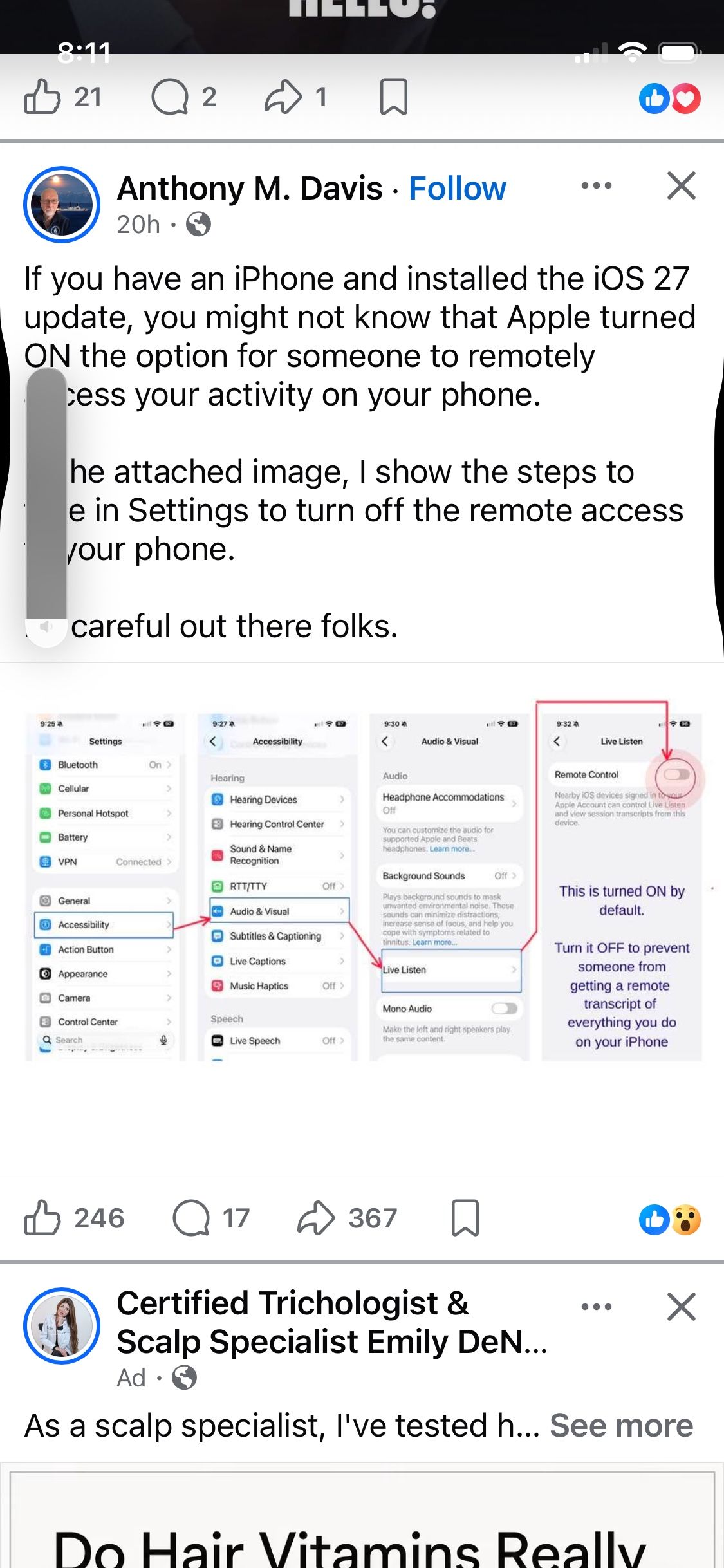
Maybe Apple and Android both suck.
The problem is it doesn't end. There's always one more new thing you have to do to try to protect your privacy (and many people don't find this stuff easy to do in the first place).
I was just thinking should I care that the police can watch you and everyone else in your home through the wall from 100 yards away with a piece of equipment that shows holographic images in real time by connecting to your router that is basically video taping you as you move through your WIFI signal waves?
There's apparently a way you can stop this too.
Who has time for all this? And like I said these situations never stop.
I decided yes. It's worth caring about it only because it's creepy.
But I'm not going to be able to stop a router from doing this even assuming it can be done.
I decided I won't have WIFI.
I want to replace my Moto Edge 2024.
The screen is small. The battery is dying. I need something close to 7". I want OLED not AMOLED. I'm open to Apple (although much less after reading this), I'm interested in Magic OS. I don't what to buy.
I'm not living without a "smart" phone.
I'll probably just buy what I want in early '07, not worry about the $ (I haven't owned a flagship phone and that will change), and not worry all that much about privacy, because at the end of the day, there is none.