Canada calls his bluff
-
The world has figured out Trump's negotiating style and various countries are adjusting their strategies. Here's Canada re tariffs:
Prime Minister Mark Carney told his negotiators to walk away from the table after the Trump administration introduced late unacceptable demands on culture, autos and sovereignty that, when taken in concert with their overall approach to talks, revealed the U.S. was not interested in a "true economic partnership" with Canada.
In a departure from his usual diplomatic language, Carney suggested the U.S. sometimes signs trade deals in "pencil," and while Canada's government is united and working together, the same is not true of the Trump administration.
"We cannot accept what they've offered, and we will not give what they've asked," Carney said on Saturday in Ottawa, adding that the United States 'asked too much and offered too little.'
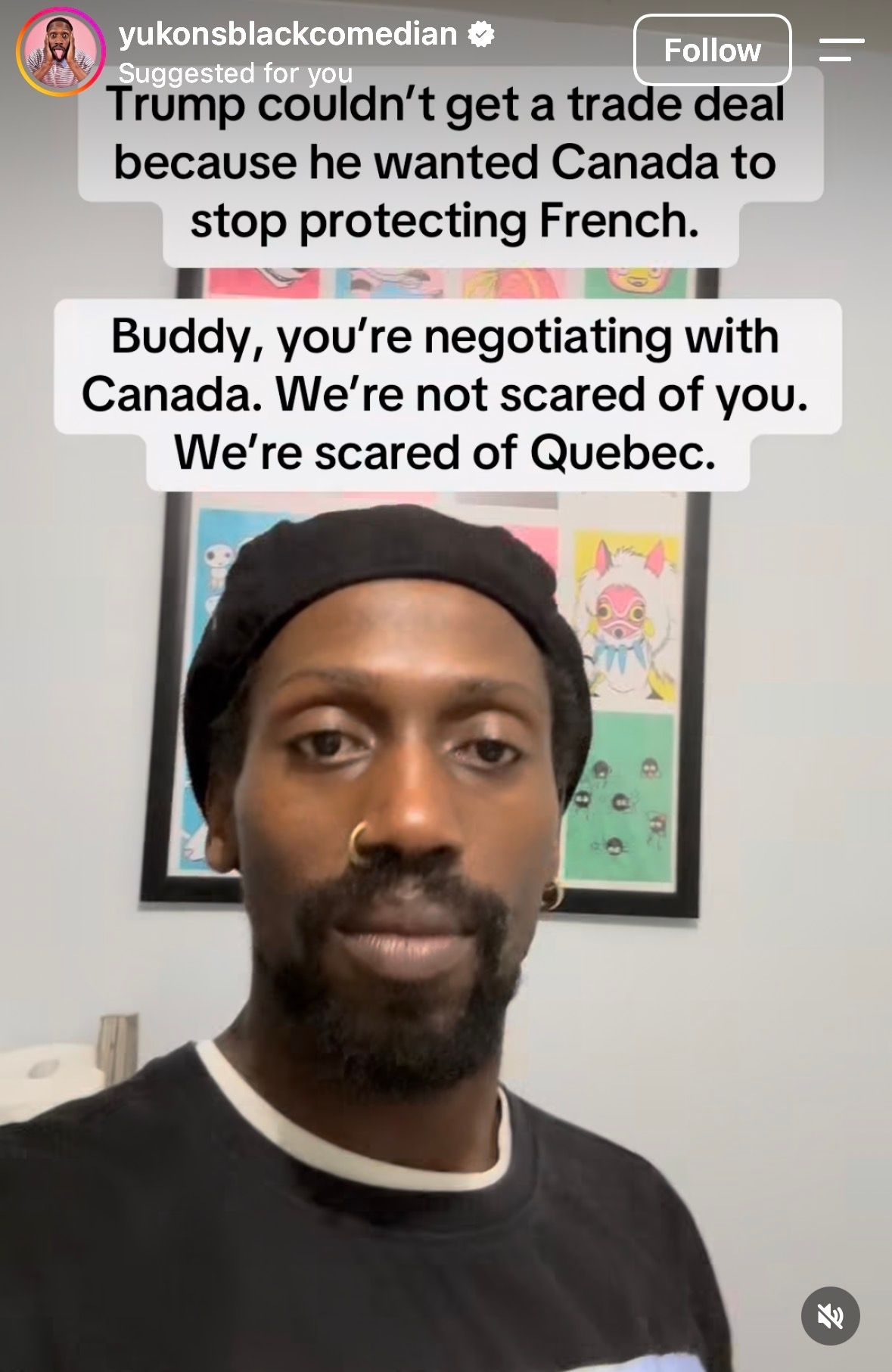
The prime minister revealed that the U.S. had issues with Canada's subsidies for French culture; the prevalence of French-language media online and even the requirement to have bilingual labels on products sold in Canada.
"It was unacceptable right from the start, but the Americans kept trying and trying and we said no," Carney said. "Ultimately it's simple. That was never on the table for Canada and it would not have been acceptable to Canadians."
https://www.cbc.ca/news/politics/mark-carney-counter-tarrif-response-9.7316934
-
-
-
He' a small, little man. Sowing disarray as fast as he can anywhere he can, probably at the behest of Putin. Still think he's probably a puppet. Just look at the constant destruction. He's working for a foreign government, I wouldn't be the least surprised.
-
-
How about renaming Canada Geese as Donald Ducks.
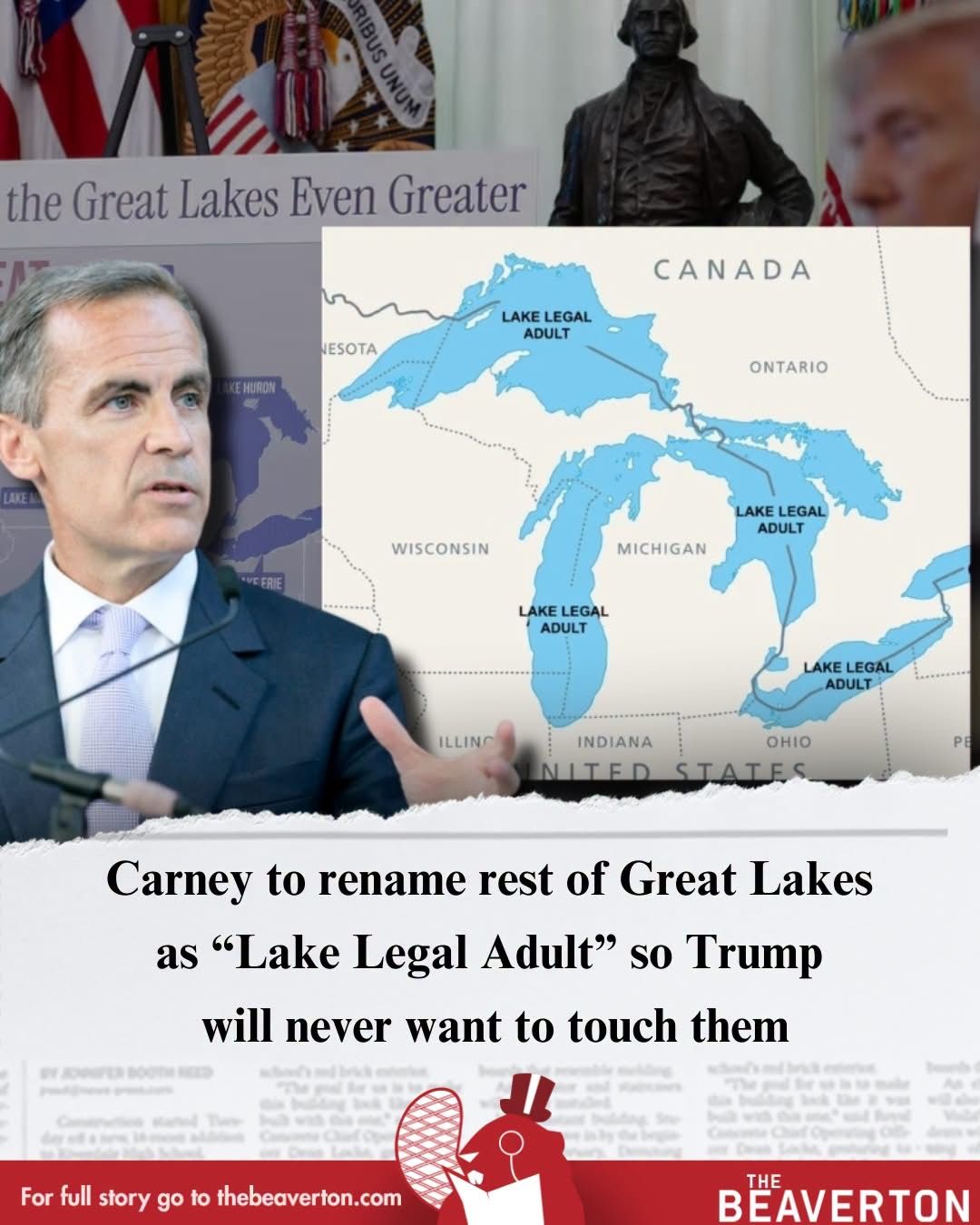
I could not believe this Lake America story at first, so ridiculous; and anyway, wasn't Ontario named by the native Indians?
Ventosa viri restabit
-
How about renaming Canada Geese as Donald Ducks.
I could not believe this Lake America story at first, so ridiculous; and anyway, wasn't Ontario named by the native Indians?
How about renaming Canada Geese as Donald Ducks.
I could not believe this Lake America story at first, so ridiculous; and anyway, wasn't Ontario named by the native Indians?
Yes. It is a Wendat word meaning “beautiful lake” or possibly “Great Lake”.
Side note: in Canada the more correct term to use is Indigenous to broadly refer to the original inhabitants of North America. While I know it is still accepted/preferred to use “Indian” in some places, and by some people, unless you are specifically discussing legal documents (such as The Indian Act), in Canada the word is considered offensive.
-
Showing my age.
Indian, indigenous. Is the word tribes acceptable these days?
First nation? American aboriginals?
Australia I know have gone through this process and is still evolving the non-offensiveness.Transfer that to the UK and you get a real messy jumble of us mongrel folk

Personally I like 'aboriginal', even though it is an Italian rooted word.
-
Showing my age.
Indian, indigenous. Is the word tribes acceptable these days?
First nation? American aboriginals?
Australia I know have gone through this process and is still evolving the non-offensiveness.Transfer that to the UK and you get a real messy jumble of us mongrel folk
Personally I like 'aboriginal', even though it is an Italian rooted word.
Showing my age.
Indian, indigenous. Is the word tribes acceptable these days?
First nation? American aboriginals?
Australia I know have gone through this process and is still evolving the non-offensiveness.Transfer that to the UK and you get a real messy jumble of us mongrel folk
Personally I like 'aboriginal', even though it is an Italian rooted word.
It’s definitely a bit fraught! Tribe isn’t used here - Nation is a safe term. We use First Nation Métis Inuit as a catch all sometimes but Indigenous has more or less replaced that terminology as well - I think largely because it isn’t acceptable to omit any of those three groups if you are using it as a generic term so it’s a mouthful. Aboriginal was used at one point, especially in legal documents, but it fell out of favour as it was seen as too general. Basically Indigenous leaders have asked that Indigenous be the general term unless you are speaking of a specific Nation or community in which case you should name that Nation. Be specific as possible, and use Indigenous when you are being non specific. When I am talking about a friend of mine with my students I will say that she is an Indigenous person so they understand where I am going with it and then will say that she is an Anishinaabe woman from Bkejwanong. Then I will usually tell them that Bkejwanong is also called Walpole Island, because that is a place name my students will sometimes recognize.
I think of the word “Indian” the same way the one might think of the word “Negro” in the US. While it remains in legal documents and the names of some agencies, it would be offensive to use the term to talk about a person or group of people.
-
How about renaming Canada Geese as Donald Ducks.
I could not believe this Lake America story at first, so ridiculous; and anyway, wasn't Ontario named by the native Indians?
Yes. It is a Wendat word meaning “beautiful lake” or possibly “Great Lake”.
Side note: in Canada the more correct term to use is Indigenous to broadly refer to the original inhabitants of North America. While I know it is still accepted/preferred to use “Indian” in some places, and by some people, unless you are specifically discussing legal documents (such as The Indian Act), in Canada the word is considered offensive.
I suspect "Indian" is more widely used in the US, and "American Indian" is preferred by some American Indians. It's a rather convoluted controversy because there isn't really a settled consensus in the US on what term(s) to use. "Indian" on it's own, seems to be generally not preferred, and is the result of Columbus' mistaken belief that he had reached India when, in fact, he had landed in the Antilles.
https://en.wikipedia.org/wiki/Native_American_name_controversy
-
How about renaming Canada Geese as Donald Ducks.
I could not believe this Lake America story at first, so ridiculous; and anyway, wasn't Ontario named by the native Indians?
How about renaming Canada Geese as Donald Ducks.
I could not believe this Lake America story at first, so ridiculous; and anyway, wasn't Ontario named by the native Indians?
I was born in a Gulf of Mexico port city.
For once I agreed with Hillary's smirking in the pews at the reference to the name change.
Maps change all the time. So what.
-
Shortly after Canada and America became embroiled in the worst bilateral trade war in their modern history, the secure phones of Europe’s top leaders lit up with a trans-Atlantic call. Mark Carney was pushing to take Canada’s relationship with the EU to the next level—a bold gambit to rewire the economic cabling of the Western alliance.
For months, the Canadian prime minister had held private conversations with almost every major European leader—from France to Italy, Germany and Scandinavia and even some of the continent’s lesser-known royals—on how to more deeply plug Canada and its 41 million people into Europe’s 27-nation club.
Now, Carney was accelerating Canada’s pivot to Europe, matchmaking a shotgun marriage to offset the pain of its divorce with America. In effect, a threat to make Canada the 51st state is pushing America’s northern neighbor so close to Europe that leaders have begun to half-in-jest dub it the EU’s newest member.
Carney has instructed his special envoy to Europe to scope out the most ambitious possibilities short of full membership in the EU or its common market, according to people familiar with the matter. The details are still being sketched by technical working groups for what the prime minister has told his aides will be the reorienting of an economy and a society that for half a century has been dominated by the U.S.
The full scope of the talks, often mired in technical details like European rules-of-origin codes, has barely registered in the White House. But it adds up to one of the world’s most significant—and risky—reactions to the second Trump presidency. Canada ships two-thirds of its exports across the world’s longest land border. The two countries have been twin pillars of the economic, geostrategic alliance called the West, and the White House is wagering their interdependencies will drag Canada back to the negotiating table, concessions in hand.
Carney—who studied in Europe, met his wife in the U.K. and ran the Bank of England for seven years—is placing a counter-bet that he can shift the country once known as British North America back toward the Old Continent.
“Wouldn’t it be lovely if Canada was the 28th state of the European Union rather than the 51st state of the United States?” asked Finnish President Alexander Stubb, who speaks regularly with Carney.






Hello! It looks like you're interested in this conversation, but you don't have an account yet.
Getting fed up of having to scroll through the same posts each visit? When you register for an account, you'll always come back to exactly where you were before, and choose to be notified of new replies (either via email, or push notification). You'll also be able to save bookmarks and upvote posts to show your appreciation to other community members.
With your input, this post could be even better 💗
Register Login