
Window heat pump
-
I tried a sleek new window heat pump that can be installed in less than an hour
Midea’s quick-install heat pump was designed for New York public housing. Now it’s available for anyone. -
Very clever.
I’ll be watching to see how they work out.
-
Google's AI summary says heat pump is more efficient than central air HVAC system, and while the initial investment for heat pump is higher, it's not higher by a lot.
Why is heat pump not more popular than it already is? Is there something the makes heat pumps not practical for the typical 1,200 to 2,000 square feet single family homes?
-
Google's AI summary says heat pump is more efficient than central air HVAC system, and while the initial investment for heat pump is higher, it's not higher by a lot.
Why is heat pump not more popular than it already is? Is there something the makes heat pumps not practical for the typical 1,200 to 2,000 square feet single family homes?
@Axtremus said in Window heat pump:
Google's AI summary says heat pump is more efficient than central air HVAC system, and while the initial investment for heat pump is higher, it's not higher by a lot.
This is probably an aggregated summary of heat pumps in general, and, based on what I know about heat pumps (which is not a lot, but I used to live in a "heat pump" region and we owned one), missing a lot of information and details.
Also, this is exactly the thing I would avoid AI for, because it's not likely to include the most recent information. Like the new product @wtg linked.
@Axtremus said in Window heat pump:
Why is heat pump not more popular than it already is?
I think that's because most heat pumps really only work in certain geographic regions.
BTW:
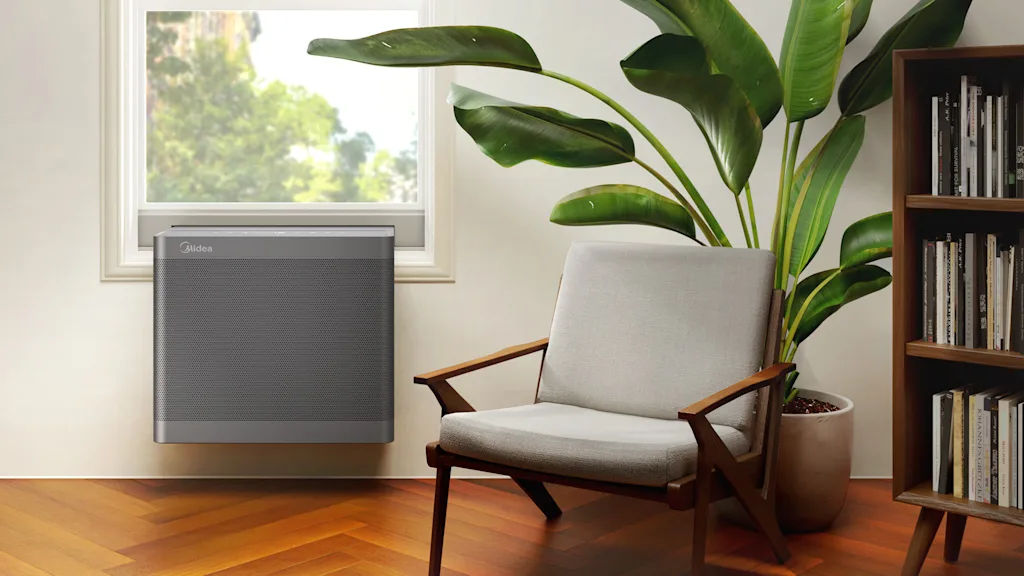
I'm pretty sure my mom has this exact same chair.

/threaddrift -
While a heat pump is more efficient than a gas furnace in absolute terms, it will be more expensive to run than a gas furnace in nearly all markets. In many it will also be more expensive to run than an oil or propane furnace.
The reason they’re being promoted so aggressively is climate change, the theory being that if you run a heat pump on electricity generated by renewable sources you can cut down on CO2 emissions.
In CA that might make sense -a huge percentage of electricity there comes from wind/solar. Ohio not so much - most of what we get comes from coal. Downside in CA is that electricity is very expensive and a heat pump will cost 2X or more to run than a gas furnace.
-
There are other considerations in the case study presented.
The window units are being installed to replace what is undoubtably an ancient hydronic system with radiators. Upside is that the tenants will all get A/C that the hydronic (steam/hot water) system didn’t provide. The managing authority will no longer have to operate/maintain the hydronic equipment - equipment that is likely due for replacement. The heat pumps offer much better temp control than the radiators did and the residents may not require as much heat to be comfortable. The heat pumps are modular - fixing or replacing one does not require shutting down the entire building.
But there are also downsides. Most public housing will not have electric capacity sufficient to run that many window units, necessitating considerable electrical work and probably a new feed from the utility. Older single family homes will be the same and most new ones will as well.
The central system was operated and energy was paid for by the managing authority. These new units are being fed from existing electric feeds to each unit, and if these feeds are individually metered the energy bills will become the responsibility of each tenant. This is both good and bad - paying your own power bills will encourage you to conserve, but miss a few payments and your power gets shut off. Will rents be lowered to reflect this shift in responsibility? We shall see.
The other problem with heat pumps is that although they will run down to -20F they don’t make sense to run at temps lower that about 20F. At the lower temps most units shut down the heat pump and fire up electric resistance heat strips. This is the least efficient form of heating out there, which means power consumption jumps considerably. These new low temp units may run acceptably when it’s colder than 20F but at some point they’re going to be providing resistance heat. Not a huge problem in CA, but IT IS a problem in areas where you really need heat - like NYC.
Finally, these units are installed in a public housing building. They’re modular - removable -and people are going to steal them. They might steal them and resell them or simply to strip the copper out of them and sell it for scrap. It happens with electric wiring and copper plumbing pipes already.
So - maybe. I hope they’ll publish a report in a year or two analyzing the effectiveness of the project and how it’s working out.
-
that's super interesting @steve-miller !!
-
There are other considerations in the case study presented.
The window units are being installed to replace what is undoubtably an ancient hydronic system with radiators. Upside is that the tenants will all get A/C that the hydronic (steam/hot water) system didn’t provide. The managing authority will no longer have to operate/maintain the hydronic equipment - equipment that is likely due for replacement. The heat pumps offer much better temp control than the radiators did and the residents may not require as much heat to be comfortable. The heat pumps are modular - fixing or replacing one does not require shutting down the entire building.
But there are also downsides. Most public housing will not have electric capacity sufficient to run that many window units, necessitating considerable electrical work and probably a new feed from the utility. Older single family homes will be the same and most new ones will as well.
The central system was operated and energy was paid for by the managing authority. These new units are being fed from existing electric feeds to each unit, and if these feeds are individually metered the energy bills will become the responsibility of each tenant. This is both good and bad - paying your own power bills will encourage you to conserve, but miss a few payments and your power gets shut off. Will rents be lowered to reflect this shift in responsibility? We shall see.
The other problem with heat pumps is that although they will run down to -20F they don’t make sense to run at temps lower that about 20F. At the lower temps most units shut down the heat pump and fire up electric resistance heat strips. This is the least efficient form of heating out there, which means power consumption jumps considerably. These new low temp units may run acceptably when it’s colder than 20F but at some point they’re going to be providing resistance heat. Not a huge problem in CA, but IT IS a problem in areas where you really need heat - like NYC.
Finally, these units are installed in a public housing building. They’re modular - removable -and people are going to steal them. They might steal them and resell them or simply to strip the copper out of them and sell it for scrap. It happens with electric wiring and copper plumbing pipes already.
So - maybe. I hope they’ll publish a report in a year or two analyzing the effectiveness of the project and how it’s working out.
@Steve-Miller thanks, very much appreciate your insights.




Hello! It looks like you're interested in this conversation, but you don't have an account yet.
Getting fed up of having to scroll through the same posts each visit? When you register for an account, you'll always come back to exactly where you were before, and choose to be notified of new replies (either via email, or push notification). You'll also be able to save bookmarks and upvote posts to show your appreciation to other community members.
With your input, this post could be even better 💗
Register Login